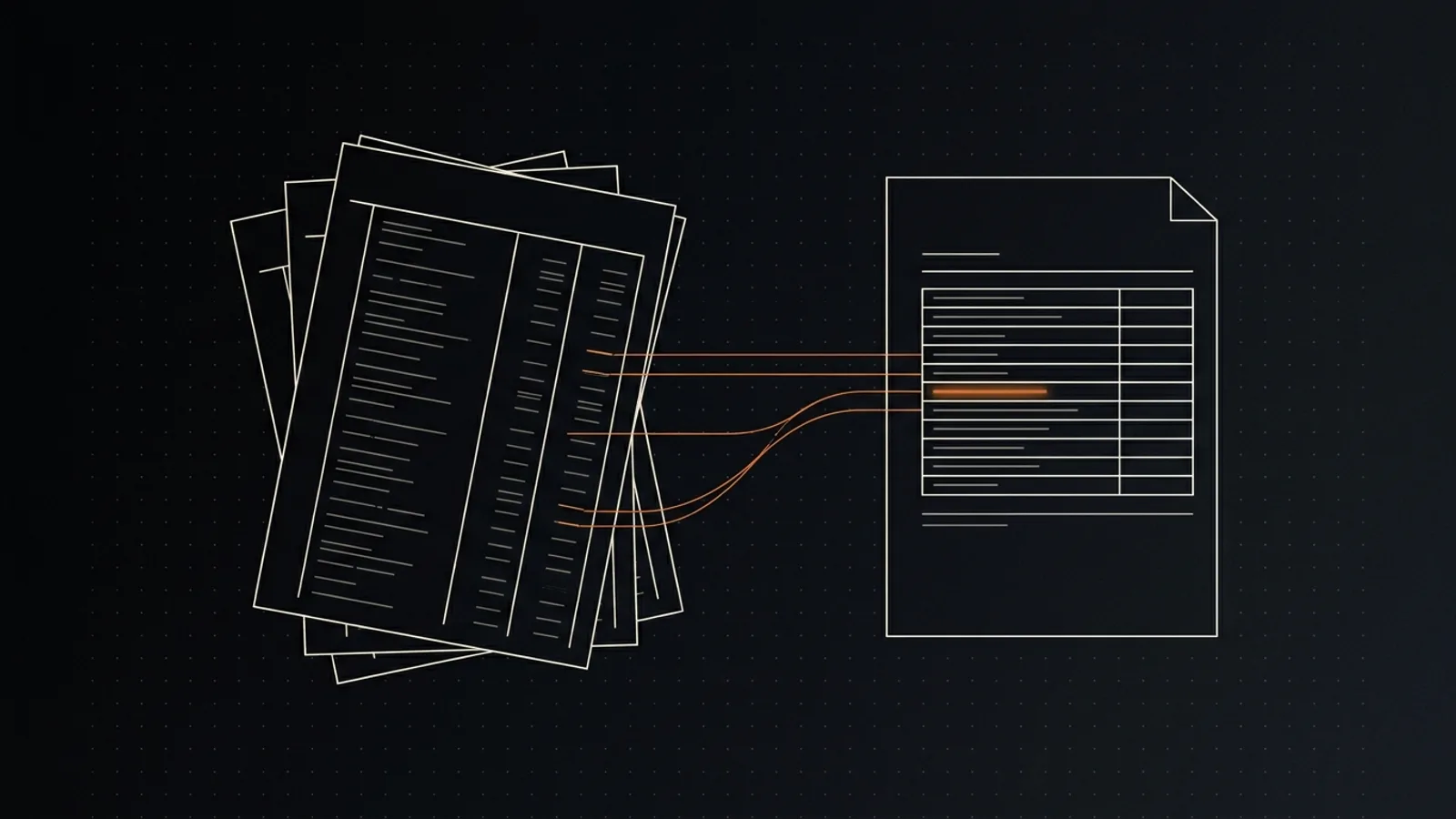
Short answer: The monthly pack for your family council or board is a recurring loop: the same sources, the same calculations, the same deadline, every month. Most of it can run as code inside the systems you already use. One step, drafting the commentary on what moved, uses a model. A person checks and signs. The pack arrives days earlier, every figure can be traced to its source, and it no longer depends on the one person who knows how to build it.
This is for owners and controllers of family companies who rebuild the council or board pack by hand every month, and for the family members who sit on the receiving end of it.
What does the monthly pack really cost?
Ask who builds the pack and how long it takes. In most family companies the answer is one person, usually the controller and often a family member, and a week of evenings after the books close.
The hours are only part of it. The bigger costs are harder to see:
- Delay. The council decides on numbers that are already a week or more old.
- Corrections. A figure changes after the pack has gone out, and the next meeting starts by re-explaining last month.
- One person. If the controller is away, retires or leaves, nobody else can build it. In a family business, that is a succession problem as much as an operating one.
None of this is a reason to buy software. It is a reason to count. Before anything is built, we measure four things: hours per pack, days from close to ready, corrections after it goes out, and how many people can build it (rule 01). Those four numbers are what the work is judged against at day 90.
Which parts of the pack can run on their own?
Map the pack the way it is actually built, step by step, then sort each step: delete it, turn it into code, give it to a model, or leave it with a person (rule 03). In a composite example from the kind of company we work with, a manufacturer's monthly family-council pack sorts like this:
| Step | Sorted to |
|---|---|
| Rebuild the 40-tab spreadsheet by hand | Delete |
| "Is this the final version?" emails | Delete |
| Pull the trial balance, payroll, bank balances and covenant figures | Code |
| Reconcile shareholder and intercompany loans | Code |
| Compute KPIs and variances against budget | Code |
| Flag every variance beyond the controller's threshold | Code |
| Assemble and send the pack | Code |
| Draft the commentary on each flagged variance | Model |
| Clear reconciliation exceptions | Person |
| Edit and sign the commentary | Person |
Twelve steps: two deleted, seven code, one model, two people. The model is the third choice, not the first. It gets the one step that needs judgement about language, not numbers.
Why does a model never decide whether a number is acceptable?
Because that is the controller's job, and the family's. A rule does the flagging: if gross margin is more than two points off budget, the line is flagged, every time, the same way. A model only reads the ledger entries behind a flagged line and drafts a sentence naming what moved it. The controller rewrites what is wrong and signs. If a prompt is doing arithmetic or deciding a tolerance, it is in the wrong place (rule 04).
In practice, a March close might look like this. Gross margin comes in 3.1 points under budget. The rule flags it. The draft names three entries: freight surcharges on two inbound steel orders and a scrap write-off on one line. The controller adds that the scrap followed a die change and that both are one-offs, then signs. The pack goes out with that line linked to the three entries, and the whole sequence is logged (rule 08).
What does "every figure traced to source" mean for the council?
It means a council member who asks "where does that number come from?" gets an answer in one click, not a promise to check. Every figure in the pack links back to the ledger entry, payroll run or bank balance it came from. The question stops being whether the pack is right and becomes what to do about it, which is the conversation a council exists to have.
What changes, and what doesn't?
In the composite example, re-measured at day 90 against the same four numbers:
| Before | After | |
|---|---|---|
| Hours per pack (controller + owner) | 16 + 3 | 3 + 1 |
| Ready after close | 7 business days | 1 business day |
| Figures traced to source | Spot-checked | Every one |
| Who can build it | One person | Anyone, with the runbook |
That is about 180 hours a year: (19 − 4) hours × 12 packs. In dollars, that is modest, and it should be said plainly. The real return is a council deciding on numbers a week fresher, and a pack that no longer depends on one person.
What doesn't change: what goes in the pack, who signs it, and what the family decides. The decisions stay with the family. The spreadsheet weekend does not.
Where do we start?
Count next month's pack before anyone builds anything. Note the hours, the days from close to ready, the corrections, and who could build it if the usual person were away. If those numbers make the case, the sort above is the next step; if they don't, that is a real answer too (rule 14).
If your council or board pack runs through one person and arrives a week late, book a 30-minute call. No deck, just the work that piles up.